
I've been getting the same question from parents lately. It shows up in conversations after talks, in messages from friends, and even at the dinner table with family. The question is some variation of: "What certifications should my kid get so they're ready for AI?"
I understand why parents ask. We all want to give our kids an edge. But if I'm being honest, I think we're focusing on the wrong thing.
AI isn't a career path. It's something that's going to show up in every career. The most helpful thing parents can do right now isn't to steer their kids toward a certain certification or job title. It's to help them get comfortable using AI in whatever they're already interested in.
Certifications have a shelf life, habits don't
I'm not saying certifications are useless. They can show you know the basics, and sometimes they matter. But with AI, things change fast. A certification from two years ago might already be irrelevant. The tool you learned could disappear overnight.
What actually lasts is the habit of using AI in everyday work. If a kid is using AI to brainstorm for a school project, break down a tough concept, or organize their thoughts before writing, they're building something that sticks. That habit is worth a lot more than a certificate.
They're learning by doing, not just reading about it. That difference is huge.
The real advantage is reps
Think about the people who figured out the internet early. It wasn't the ones who took 'internet courses' in the late 90s. It was the people who just started using it, tried things, and made it part of how they worked and connected.
AI is heading the same way. The kids who will be ready are the ones getting their reps in now. They're using AI to work through problems, try ideas, make things, and get better at asking questions and judging the answers.
This isn't about turning kids into AI experts. It's about building the habit of asking, 'How could AI help me with this?' That instinct, built over time, is what actually makes a difference.
Encourage AI in what they already love
The most helpful thing parents can do is stop treating AI like a separate subject. Instead, see it as a tool your kid can use in whatever they're already excited about.
- A kid who loves writing can use AI to explore different narrative structures or get feedback on a draft.
- A kid interested in music can use AI to generate backing tracks, experiment with composition, or study how songs are arranged.
- A kid into sports can use AI to analyze game footage, build training plans, or study opponent tendencies.
- A kid who likes science can use AI to research hypotheses, model experiments, or make sense of complex data.
It doesn't matter what the subject is. What matters is helping kids build the habit of reaching for AI as a thinking partner when they're already interested and motivated.
Habits need guardrails
This doesn't mean handing a kid an AI tool and walking away. Like anything powerful, AI works best when kids understand where it helps and where it doesn't.
AI isn't a therapist, a doctor, or a substitute for a trusted adult. Kids need to know that. If they're dealing with something emotional, personal, or health-related, AI isn't the place to go for answers. That boundary matters, and it's up to parents to make it clear early.
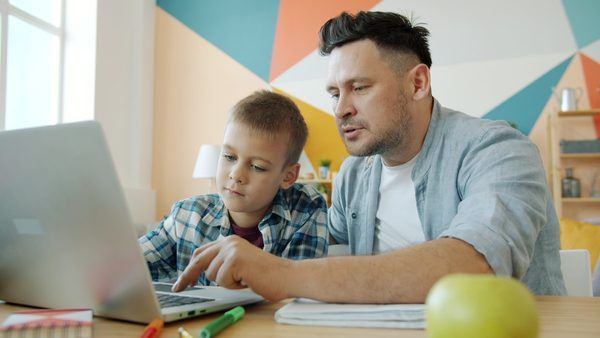
Younger kids especially need a guided experience. Sit with them. Ask what they're using it for. Talk about what it got right and what it got wrong. The real learning happens in that conversation, not in the tool itself.
For kids of any age, critical thinking has to come first. AI can sound confident and still be completely wrong. The habit we're building isn't blind trust in the tool. It's knowing when to use it, when to question it, and when to set it aside. That kind of judgment doesn't come from a setting or a filter. It comes from parents being involved.
What this looks like when they enter the workforce
This is where it really pays off. When these kids join the workforce, they won't need a crash course in AI. They'll already be thinking about how it can help them solve problems, work smarter, and spot things others might miss.
I've seen this happen with people who started using AI early. They don't wait for a big company rollout or a training session. They just dive in. They find ways to work smarter, ask better questions, and move faster without cutting corners.
That's the kind of person every team wants. Not someone with a certificate on the wall, but someone who's already built the habit.
Stop preparing kids for AI jobs, prepare them for AI-shaped work
There won't be a tidy category called 'AI jobs' in the future. Every job will involve some AI. The real question isn't if your kid will use AI, but whether they'll be ready and confident when it's part of their work.
The best thing you can do is take the pressure off chasing certifications and focus on something simpler. Let your kid use AI. Encourage them to try things. Help them see it as a normal part of how they think, create, and solve problems.
The kids who build that habit now won't need to catch up later. They'll already be there.